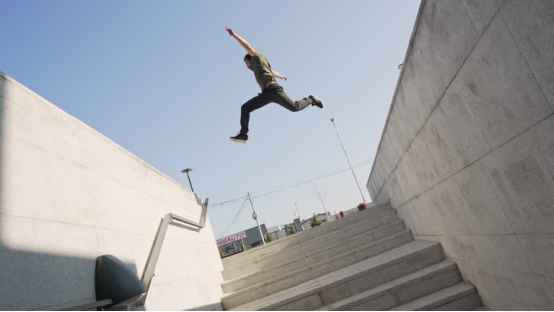
Parkour is more than just the breathtaking jumps and vaults seen in movies. It is a holistic training discipline that uses movement to overcome obstacles in one’s path. At its core, Parkour is about developing the physical and mental capacity to be strong, useful, and efficient. It teaches practitioners, known as traceurs, to see their environment not as a series of limitations, but as a landscape of possibilities. This comprehensive guide will take you from the foundational philosophy of Parkour to the specific physical conditioning, fundamental movements, and mental strategies required to start your journey safely and effectively.
Whether you’re a complete beginner intrigued by the freedom of movement or an athlete looking to enhance your functional strength, this pillar page provides the detailed framework you need. We will explore how to build explosive power, protect your joints, master essential techniques, and, most importantly, conquer the fear that holds you back. Prepare to transform your perception of movement and the world around you.
The Core Philosophy: A Mindset for Movement
Before learning the first jump or vault, it is crucial to understand the philosophy that underpins Parkour. It is not about reckless risk-taking; it is about calculated, efficient, and fluid movement. The goal is to get from point A to point B as smoothly and directly as possible, using the human body’s full potential. This philosophy extends beyond physical movement and becomes a way of life, emphasizing resilience, problem-solving, and continuous self-improvement.
Redefining Obstacles
The central tenet of Parkour is the concept of overcoming obstacles. A wall is not just a barrier; it is an opportunity to practice a climb-up. A railing is not an obstruction; it is a chance to execute a vault. This mindset trains the traceur to analyze challenges, assess their capabilities, and find creative, efficient solutions. This problem-solving skill translates directly into daily life, fostering a proactive and resilient attitude towards personal and professional challenges.
Efficiency and Fluidity
Parkour values efficiency above all else. Every movement should have a purpose, conserving energy and minimizing strain. This is achieved through practice and repetition, which leads to fluidity—the seamless linking of movements. A traceur flowing through an environment is a demonstration of complete control, where thought and action become one. This state of “flow” is a key objective, representing a deep connection between mind, body, and environment.
“Être fort pour être utile” – Be Strong to Be Useful
This motto, originating from the founder David Belle, encapsulates the altruistic spirit of Parkour. The strength, agility, and mental fortitude developed through training are not just for personal gain. They are tools to be used to help others, whether in an emergency situation or simply by being a capable and dependable member of the community. It grounds the practice in a sense of purpose beyond personal achievement.

Foundational Physical Conditioning for Parkour
To practice Parkour safely and effectively, a strong physical foundation is non-negotiable. The discipline demands a unique blend of strength, power, endurance, and mobility. A dedicated conditioning program is essential to prepare your body for the dynamic stresses of running, jumping, climbing, and landing. This training focuses on functional, bodyweight strength that translates directly to the movements you will perform.
Building Explosive Lower Body Power
Your legs are your primary engine in Parkour. They are responsible for generating the power for jumps and absorbing the impact of landings. Training should focus on developing this explosive strength.
- Squats: The cornerstone of leg strength. Master the bodyweight squat with perfect form before considering adding weight. Focus on depth and control.
- Lunges: Excellent for building single-leg strength and stability, which is crucial for unbalanced movements and landings.
- Plyometrics: Exercises like box jumps and broad jumps train your muscles to produce maximum force in minimum time. Start with low boxes and short distances, focusing on a soft, controlled landing.
Developing Essential Upper Body and Grip Strength
A strong upper body is vital for climbing, vaulting, and supporting your own weight. Grip strength, in particular, is a critical component that is often overlooked.
- Push-ups: A fundamental exercise for chest, shoulder, and tricep strength. Vary your hand positions to target different muscle groups.
- Pull-ups: The ultimate test of upper body pulling strength. If you cannot do a full pull-up, start with negative pull-ups (jumping to the top and lowering yourself slowly) or use resistance bands.
- Hanging: Simply hanging from a bar is one of the best ways to build foundational grip strength and shoulder stability. Aim for increasing durations.
Forging a Resilient Core for Stability and Control
Your core is the link between your upper and lower body. A strong core provides stability, allows for efficient power transfer, and protects your spine. Every movement in Parkour originates from or is stabilized by the core.
- Planks: A static hold that builds incredible core endurance. Ensure your body is in a straight line from head to heels.
- Leg Raises: Lying on your back, raise your legs to 90 degrees without bending your knees. This targets the lower abdominals and hip flexors.
- Hollow Body Holds: This is a key gymnastic and Parkour exercise that teaches total body tension and core control.
Joint Protection and Mobility
Parkour places significant stress on the joints, especially the ankles, knees, and wrists. Conditioning these areas is crucial for longevity in the sport. This involves both strengthening the surrounding muscles and performing regular mobility work to maintain a full range of motion.

Mastering the Ten Basic Movements of Parkour
With a solid physical foundation, you can begin to learn the fundamental movements. These are the building blocks that will eventually be combined into fluid lines. Practice each movement in a safe, low-stakes environment, focusing on perfect form and control before attempting them at height or speed. Repetition is key to making these movements second nature.
Balance and Quadrupedal Movement
Before you can run, you must walk. Balance is the most fundamental skill. Practice by walking along curbs, railings (at ground level), and lines. Challenge yourself by changing speeds and directions. Quadrupedal Movement (QM), or moving on all fours, builds coordination, strength, and a connection to the ground.
Running and Jumping Techniques
Running in Parkour is about adapting to the terrain. Jumping is about precision and control. The Precision Jump is a standing jump from one specific point to another. Start with short distances on the ground, focusing on sticking the landing without needing to take a step. The Running Precision is the same concept but with a running start.
The Art of the Safe Landing (The PK Roll)
Learning how to land safely is the most important skill in Parkour. The Safety Roll, or Parkour Roll (PK Roll), is a technique used to dissipate the force of impact from a jump or drop across a larger area of your body. You land on the balls of your feet, absorb with your legs, and then roll diagonally across your back from one shoulder to the opposite hip. Practice this on soft grass from a standing position first, then from small drops.
Essential Vaults for Beginners
Vaults are techniques for getting over obstacles efficiently. They are a core component of Parkour flow.
- Safety Vault: A simple, controlled vault where you place one hand and your opposite foot on the obstacle, then swing your other leg through.
- Speed Vault: A dynamic vault where you plant one hand on the obstacle and swing your entire body over sideways in a fluid motion.
- Lazy Vault: A common and stylish vault where you sit on the obstacle, place both hands beside you, and swing your legs over.
Basic Climbing and Wall Techniques (Cat Leap)
Interacting with vertical surfaces is a key part of Parkour. The Cat Leap (or Cat Grab) is a foundational technique where you jump towards a wall, grabbing the top edge with your hands while planting your feet against the wall’s surface. From here, you can learn to perform a Climb-Up to get onto the obstacle.

Overcoming the Mental Hurdles: Conquering Fear
Fear is a natural and essential response that keeps us safe. However, in Parkour, we must learn to manage it, understand it, and prevent it from paralyzing our progress. Overcoming mental barriers is as important as physical training. This process is not about eliminating fear, but about building the confidence to act despite it.
Start Small, Build Confidence Incrementally
The most effective way to overcome fear is through gradual exposure. If you are afraid of a jump, find a smaller, safer version of it. A precision jump across a 10-foot gap at height is terrifying. But a precision jump across a 2-foot gap on a painted line on the ground is not. Master the technique at the lowest possible level. Slowly and incrementally increase the challenge—raise the height by a few inches, widen the gap by a few inches. Each successful attempt builds a small deposit of confidence.
The Power of Visualization and Mental Rehearsal
Before attempting a challenging movement, close your eyes and visualize yourself completing it perfectly. Run through every step in your mind: the takeoff, the body position in the air, the landing. This mental rehearsal prepares your nervous system for the actual movement, making it feel more familiar and reducing anxiety. Professional athletes use this technique extensively to enhance performance and build self-belief.
Differentiating Between Healthy Fear and Irrational Panic
It is vital to listen to your fear. Healthy fear is your body’s way of telling you that you might not have the physical capacity for a certain challenge or that the risk is too high. This is a signal to stop, reassess, and train more. Irrational panic, on the other hand, is a mental block that occurs even when you know you possess the physical skill. Learning to tell the difference is a skill in itself. If you can perform a move 10 out of 10 times on the ground, the fear of doing it at a small height is likely more mental than physical.
The Role of Repetition in Building Trust
Confidence comes from competence. The only way to build true trust in your abilities is through thousands of repetitions of the fundamental movements. When you have performed a safety roll a thousand times on grass, your body knows exactly what to do without conscious thought. This muscle memory is your greatest ally against fear. Trust the training you have put in.

Advanced Training Strategies to Boost Parkour Strength
Once you have a solid foundation and have mastered the basics, you can incorporate more advanced training methods to significantly boost your power, strength, and efficiency. These strategies are designed to push your body beyond its current limits and prepare you for more complex and demanding movements.
Incorporating Plyometrics for Explosive Power
While basic jumps are a form of plyometrics, a more structured approach can yield huge gains in explosive power. This involves exercises that use the stretch-shortening cycle of muscles to generate maximum force.
- Depth Jumps: Step off a low box and, upon landing, immediately explode into a maximum-effort vertical or broad jump. This teaches your body to absorb and redirect force rapidly.
- Bounding: A series of exaggerated running strides, focusing on maximizing horizontal distance with each leap. This builds powerful hip extension.
- Repetitive Hurdle Hops: Set up a series of small obstacles and hop over them continuously, minimizing ground contact time.
Progressive Overload in Bodyweight Training
To continue getting stronger, you must consistently challenge your muscles. In bodyweight training, this isn’t as simple as adding more weight to a barbell. Instead, you apply progressive overload by increasing the difficulty of the exercises themselves.
- Leverage: Move from a standard push-up to a one-arm push-up, or from a squat to a pistol squat (one-legged squat). This dramatically increases the load on the working muscles.
- Volume and Density: Increase the number of repetitions or sets, or decrease the rest time between sets to make your workouts more challenging.
- Explosiveness: Perform movements with greater speed and power, such as transitioning from a standard pull-up to a muscle-up, or a standard push-up to a clapping push-up.
Skill-Specific Drills and Flow Training
Advanced training also means getting more specific. Identify a complex skill you want to learn, such as a wall run, and break it down into smaller, drillable components. Practice each component separately before putting them together. Flow training, or creating “lines,” is another advanced strategy. This involves linking multiple basic movements together in a continuous, non-stop sequence. It challenges your endurance, creativity, and ability to transition smoothly between techniques, which is the true essence of Parkour.
Frequently Asked Questions (FAQ)
- Is Parkour dangerous for beginners?
- Like any physical activity, Parkour has inherent risks. However, it is not inherently dangerous if approached correctly. The philosophy of Parkour emphasizes starting with the absolute basics in a safe environment, progressing slowly, and never attempting a movement you are not physically and mentally prepared for. The most dangerous approach is trying to replicate advanced movements seen online without proper conditioning and foundational training. Safety begins with mastering the basics, especially the safety roll.
- How long does it take to get good at Parkour?
- The timeline for proficiency in Parkour varies greatly from person to person and depends on factors like prior athletic background, consistency of training, and quality of instruction. It takes several months of dedicated conditioning just to build the necessary base strength. Mastering the fundamental movements can take a year or more. Parkour is a lifelong journey of self-improvement, not a destination with a finish line.
- Do I need to go to a gym for Parkour training?
- While Parkour gyms offer a safe and structured environment with soft mats and experienced coaches, they are not a requirement. Parkour was born in the streets and can be practiced anywhere. A local park with benches, railings, and open grass is a perfect training ground for a beginner. The most important equipment is your own body and a disciplined mindset. A combination of outdoor practice and supplemental strength training (at home or in a gym) is often ideal.
- What is the difference between Parkour and Freerunning?
- The terms are often used interchangeably, but there is a subtle philosophical difference. Classic Parkour focuses on pure efficiency: getting from A to B as quickly and directly as possible. Freerunning evolved from Parkour and incorporates more aesthetic and acrobatic movements, such as flips and spins. While Parkour is about utility and efficiency, Freerunning is about freedom of expression through movement. Many modern practitioners incorporate elements of both.