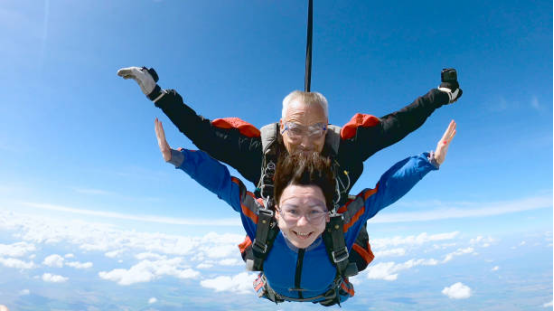
Can you breathe while skydiving? Of course you can! Although skydiving is often described as a “breath-taking” experience, it doesn’t literally mean “you can’t breathe.” In fact, the question of breathing while skydiving is a big question for many people, but trust me – it’s not that complicated.
How do you breathe while skydiving?
Are you wondering, “Can I breathe properly while skydiving?” The answer is yes! But before you get started, let’s get some basic information. A regular tandem skydive is usually done at around 12,500 feet (AGL), and while the air is thin, it shouldn’t be a problem for a healthy person to breathe. At 16,500 feet (AGL), the air is too thin to breathe, so some skydiving types (like HALO skydiving) provide oxygen for these situations.
So how do you make sure you breathe smoothly during skydiving? Here are a few tips for you to refer to:
Preparation on the plane : As the plane ascends, take a deep breath, then breathe in slowly and steadily through your nose and exhale gently through your mouth. This breathing technique will help you stay calm while ensuring your body gets enough oxygen.
After you jump out of the plane : You may be a little panicked at first, take a deep breath, and then maybe yell! Yes, yell – this is actually a very effective technique. Because if you can yell loudly, you can basically breathe smoothly! It’s a little counter-intuitive, but it works like that.
Body position during free fall : Remember to keep your head up and your chest up, with your eyes focused on the horizon. This will not only allow you to enjoy the beautiful scenery, but it will also help the air flow around your face instead of rushing directly into your nose and mouth.
How to avoid breathing errors when skydiving?
“How can I not hold my breath when skydiving?” I believe many people who skydive for the first time have this question. In fact, although this reaction is natural, if you try to hold your breath, you may make yourself more nervous and even unable to experience the thrill of free fall normally.
In addition, there is one thing that needs special attention – do not take quick shallow breaths. Although the situation will become a little tense at high altitudes, hyperventilation will increase anxiety and cause dizziness and other discomfort. So remember to keep taking deep and long breaths to make yourself more focused.
Can people with asthma skydive?
“Can asthma patients skydive?” This question is often asked. Although we cannot give professional medical advice, we can tell you that many asthma patients have successfully participated in tandem skydiving, and many of them have even obtained the qualification of certified skydivers. However, you still need to consult a doctor for such questions.
Five tips for breathing while skydiving
Deep breathing: Relaxing yourself
is important before you jump. If you think you might forget to breathe because you’re nervous, practice deep breathing beforehand. Breathing in slowly through your nose and out rhythmically through your mouth will not only help you relax, but it will also ensure you don’t forget to breathe during the jump.
Keep your head up, chest out, and eyes forward
. Remember to keep your head up, body straight, and eyes looking toward the horizon when skydiving. This is not only to give you a beautiful view, but it also helps you breathe easier when the wind is blowing in your face. Imagine if you put your head down and 120 miles per hour of wind rushed straight into your face, it would not be easy to breathe.
skydiving
is to yell. Yes, yell! When you feel that you are having trouble breathing, yell as much as you can to let your body and mind know that breathing is completely possible. Imagine that your voice has been lost in the wind, but you can still breathe in and out easily.
Focus on what
‘s happening in front of you. Skydiving is very immersive. It’s almost impossible to think about anything else. So focus on every moment you’re experiencing – the view, the feeling of the wind on your skin, or even the amazing feeling of your body flying high in the air. This focus will help you forget about the tension and adjust your breathing naturally.
Relaxation
is the most important thing to remember – relax! Although you may find it difficult to stay calm while skydiving, the more relaxed you are, the easier it will be for you to breathe. Remember, skydiving is not that scary. Freefalling lasts less than a minute, and while that time may seem fast and eternal, you will soon feel the relief and calmness once your parachute opens.
In short, breathing while skydiving is not as difficult as you think. On the contrary, if you relax yourself and master some simple breathing techniques, you can fully experience the fun and beauty of this extreme sport.

