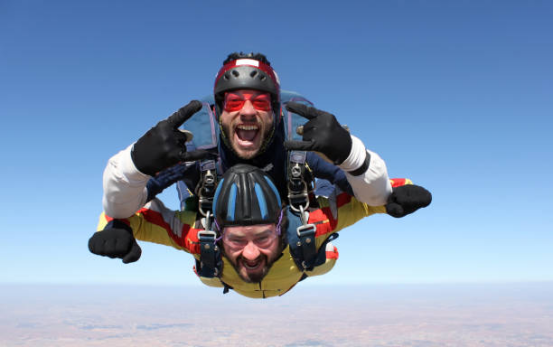
In the world of extreme sky sports, there’s a common misconception: that it’s primarily a sport of courage and skill, with little to do with physical fitness. Indeed, in short skydives or other high-altitude activities, gravity and the aircraft itself usually handle most of the work; we only need to adjust our posture, control our speed, and maintain balance. However, when you delve into more complex and extreme activities, especially wingsuit flying or formation skydiving, any shortcomings in physical fitness quickly become apparent.
In these extreme sports, especially when carrying heavy equipment for hours on foot or during long, high-intensity flights, adrenaline may not provide enough energy. When your heart rate spikes to 180 bpm, lactic acid builds up in your muscles, and your brain becomes sluggish due to insufficient oxygen supply, decision-making can significantly decline. In the air, even a minor misjudgment can be fatal. Therefore, the training of top wingsuit pilots goes far beyond sheer courage; it requires building a physical foundation through extreme physical training to maintain a clear mind and efficient operation under high pressure.
1. Restructuring of the Energy System: From Explosive to Sustained Operations
Common sky sports, such as wingsuit flying or skydiving, often rely on a burst of physical exertion in a short period of time. In these sports, the athlete’s body primarily depends on two energy systems to sustain this explosive output: the phosphagen system and the glycolytic system . These two systems can provide short bursts of high-intensity power, but their energy supply time is very limited. Simply put, it’s like an engine that relies solely on turbocharging for acceleration; it can provide short-term sprint speed, but it cannot operate sustainably.
However, mountain endurance sports, especially trail running and mountaineering, are the golden training methods for improving the body’s aerobic capacity and building endurance. These endurance sports emphasize the operation of the aerobic oxidation system, enabling the body to maintain a stable output even during long-term, high-intensity activities.
1.1 Physiological adaptation: increasing maximum oxygen uptake
One of the greatest benefits of endurance training is that it enhances the body’s maximum oxygen uptake (VO2 max) and capillary density through aerobic exercise. This means that after long-term high-altitude endurance training, the body can deliver oxygen to the brain and muscles more efficiently, delaying the onset of fatigue. For wingsuit pilots, this training, which improves oxygen supply and endurance, helps them maintain physical output for extended periods during flight, reducing the physical burden caused by insufficient oxygen supply at high altitudes.
For example, long-term hiking and mountaineering training can increase the number of red blood cells in the blood and improve oxygen-carrying capacity, thereby maintaining a high level of physical fitness in high-altitude areas where oxygen is scarce.

1.2 Lactate Threshold and Airborne Decision Making
Another crucial physiological adaptation during high-intensity exercise is the increased lactate threshold. Lactic acid is a metabolic byproduct produced by muscles under anaerobic conditions, typically leading to muscle fatigue and stiffness. When excessive lactate accumulates, an athlete’s decision-making speed and accuracy are significantly affected. In wingsuit flying, when pilots face sharp turns or high-G conditions, the core muscles and arm muscles rapidly accumulate lactate. If lactate clearance is insufficient, it can lead to muscle stiffness, impaired movement, and an increased probability of errors.
By using hill repeats—short sprints followed by a slow recovery jog on steep inclines—trainees can significantly increase their lactate threshold. A higher lactate threshold means that, under high-pressure conditions, pilots can maintain precise muscle control at higher intensity, avoiding operational errors due to muscle fatigue.
For example, a series of intermittent high-intensity hill-climbing training sessions can enhance the body’s tolerance to lactic acid, enabling pilots to maintain a clear mind and stable operational capabilities for extended periods during flight.
2. Physiological effects of high-altitude training
High-altitude environments are typically oxygen-scarce, demanding greater physical adaptability during training. As altitude increases, the oxygen content in the air gradually decreases, requiring the body to enhance its ability to adapt to low-oxygen environments. To cope with this, athletes increase their lung oxygen intake and optimize their body’s oxygen utilization efficiency.
2.1 Oxygen adaptability
During high-altitude training, pilots push their limits by increasing altitude, forcing their bodies to adapt to a low-oxygen environment and thus enhancing their lung capacity. This training not only helps pilots improve their flight performance at high altitudes but also enhances their endurance and reaction speed in low-oxygen environments.
For example, high-altitude mountain climbing or cross-country running training can help pilots gradually adapt to hypoxia, thereby maintaining high physical fitness and clear judgment during flight.

2.2 The dual challenges of physiology and psychology
High-altitude training is not only a physical challenge but also a test of mental limits. In extreme environments, the body is prone to fatigue, shortness of breath, and other discomforts, making the pilot’s mental stability particularly important. Through long-term training in high-altitude areas, pilots not only enhance their physical strength but also improve their psychological resilience and decision-making abilities by continuously adapting to these extreme environments.
3. Conclusion: Forging a steel physique to safeguard flight.
In extreme aerial sports, the “short-term energy” provided by adrenaline is not a reliable power source for sustained flight. The abilities of top wingsuit pilots come from systematic physical training and the cultivation of endurance. Through mountain endurance training , pilots can improve physiological indicators such as oxygen intake, lactic acid clearance, and muscle endurance, thereby maintaining precise operation and clear decision-making even at high altitudes, under G-forces, or during long-duration flights.
Therefore, don’t rely solely on the fleeting thrill of adrenaline. True freedom of flight is built on a strong physiological foundation. Hone your lung capacity, endurance, and fatigue resistance through rigorous mountain endurance training. This way, when you stand at the takeoff point for wingsuit flying, your confidence will no longer stem from blind courage, but from impeccable control over your physical capabilities.