Understanding Skydiving Dynamics: The Science of Freefall and Trajectory
Skydiving is a captivating sport that challenges the limits of human courage and engineering. At its core, it’s a profound demonstration of physics, where the forces of gravity, air resistance, and aerodynamics dictate every aspect of a skydiver’s journey from aircraft to earth. A deep understanding of these dynamics is not merely academic; it is fundamental to safety, control, and the ability to execute complex maneuvers. This section lays the groundwork, exploring the initial concepts of freefall and the factors that influence a skydiver’s path through the atmosphere.
The Forces at Play During Freefall
During the initial phase of a skydive, known as freefall, two primary forces are in constant opposition: gravity, which pulls the skydiver downwards, and air resistance (drag), which opposes the motion. Initially, gravity is the dominant force, causing acceleration. However, as speed increases, so does air resistance, until these two forces become balanced. This equilibrium point is known as terminal velocity.
- Gravity: A constant acceleration of approximately 9.8 meters per second squared (m/s²), or 32 feet per second squared (ft/s²), in a vacuum. In the atmosphere, this acceleration is countered by drag.
- Air Resistance: Directly proportional to the square of the skydiver’s velocity and the cross-sectional area presented to the airflow, as well as the air density and a drag coefficient.
Defining Terminal Velocity
Terminal velocity is not a fixed speed but rather a dynamic state where the downward force of gravity equals the upward force of air resistance. For an average human skydiver in a stable belly-to-earth position, this speed typically ranges from 120 to 140 miles per hour (193 to 225 km/h). However, this speed can be significantly altered by various factors, making it a crucial concept for skydivers to understand and manipulate.
- Factors Influencing Terminal Velocity: Body position, weight, clothing, and atmospheric conditions all play a role in determining the exact terminal velocity achieved.
- Dynamic Equilibrium: Once terminal velocity is reached, the skydiver’s descent speed stabilizes, and they continue to fall at a relatively constant rate until the parachute is deployed.

Controlling Freefall Speed: Techniques and Equipment for Skydivers
The ability to control freefall speed is a fundamental skill in skydiving, essential for maintaining separation from other jumpers, executing formations, and ensuring a safe deployment altitude. Skydivers achieve this control primarily by altering their body’s aerodynamic profile, effectively changing the amount of air resistance they encounter. This section explores the various methods and equipment utilized to precisely manage descent rates.
Body Position Adjustments for Speed Control
Skydivers are masters of their own aerodynamics, using subtle and dramatic changes in body posture to modify their drag coefficient. This allows them to speed up, slow down, or maintain a consistent fall rate relative to their environment and fellow jumpers.
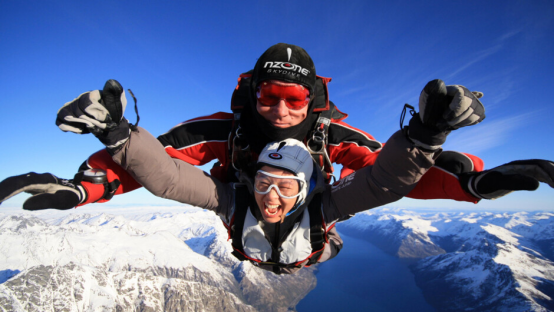
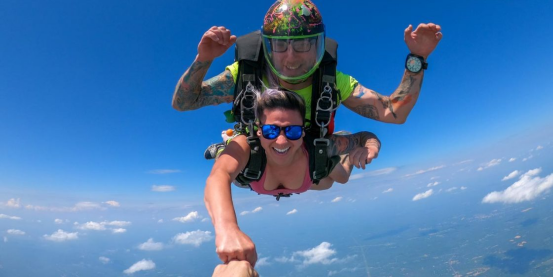
- Arch Position (Belly-to-Earth): The most common and stable freefall position, where the skydiver arches their back, allowing air to flow under their chest and over their back. This presents a large surface area to the wind, generating significant drag and a moderate fall rate (typically 120-140 mph). It is the default for formation skydiving.
- De-Arching/Flattening: By reducing the arch and flattening the body, skydivers can increase their presented surface area even further, generating more drag and slowing down their fall rate. This is often used to catch up to slower jumpers or to reduce speed for deployment.
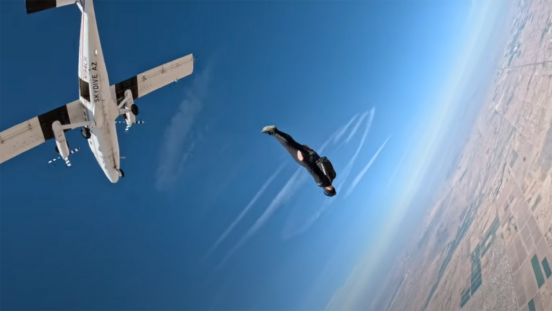
- Head-Down/Vertical Flying: Advanced skydivers can adopt a head-down or feet-down vertical orientation. This dramatically reduces the surface area presented to the airflow, leading to significantly higher fall rates (often exceeding 180 mph, up to 200+ mph). This position is crucial for vertical formation skydiving and high-performance maneuvers.
- Tracking: By streamlining the body, extending arms and legs, and angling the body relative to the wind, skydivers can convert vertical speed into horizontal movement, effectively “flying” across the sky. This reduces the vertical fall rate while increasing horizontal speed, used for separation from other groups before deployment.
The Role of Skydiving Equipment in Speed Management
While body position is paramount, certain aspects of skydiving equipment also contribute to or are designed to manage freefall speed, particularly during the deployment phase.
- Jumpsuits: Different types of jumpsuits can subtly affect drag. Baggy jumpsuits create more drag, slightly reducing fall rates, while sleek, tight-fitting jumpsuits (like those used for vertical flying or tracking) minimize drag to achieve higher speeds. Wing suits, an extreme example, are designed to generate massive lift and drag, transforming freefall into horizontal flight.
- Pilot Chute: A small parachute that is deployed first to catch the air and pull out the main parachute. Its design ensures a swift and reliable extraction, initiating the transition from freefall to controlled descent.
- Main Parachute: Once deployed, the main parachute drastically increases the skydiver’s surface area, creating immense drag and rapidly decelerating the descent to a safe landing speed (typically 10-20 mph). Modern parachutes are designed for steerability and precise landings.
The interplay between body control and equipment allows skydivers to orchestrate their entire descent, from the initial exit to the final touch-down, with remarkable precision.

Impact of Air Currents and Wind Speed on Skydiving Trajectories
While the control of freefall speed is largely an internal effort by the skydiver, their horizontal movement and overall trajectory are profoundly influenced by external atmospheric conditions, primarily air currents and wind speed. Understanding and compensating for these environmental factors is critical for accurate navigation, safe separation, and precise landings. Ignoring them can lead to dangerous situations and off-target landings.
Understanding Wind Layers and Their Effects
The atmosphere is not a uniform medium; it consists of multiple layers, each with potentially different wind speeds and directions. Skydivers must be acutely aware of these layers, from exit altitude down to the ground.
- Upper Winds (Exit Altitude): Winds at higher altitudes can be significantly stronger and in different directions than those closer to the ground. These winds primarily affect the initial horizontal drift of the skydiver during freefall. A strong upper wind can carry a skydiver many miles from their exit point before parachute deployment.
- Mid-Altitude Winds: As the skydiver descends, they pass through various wind layers. These intermediate winds continue to influence their horizontal drift, necessitating constant adjustment in body position (e.g., tracking) to mitigate unwanted movement or to intentionally move towards the landing area.
- Lower Winds (Landing Pattern): Winds near the ground are paramount for landing. Skydivers must fly their parachutes into the wind during the final approach to reduce ground speed and achieve a soft landing. Misjudging ground winds is a common cause of hard landings or injuries.
- Wind Shear: A sudden change in wind speed or direction over a short distance. Wind shear can be particularly hazardous, causing unexpected drift or making parachute control challenging during deployment and descent.
The Concept of Drift and Trajectory Management
Drift refers to the horizontal distance a skydiver is carried by the wind during freefall and under canopy. Managing this drift is central to trajectory management, which involves plotting and executing a path from exit to landing zone.
- Freefall Drift: During freefall, a skydiver acts like a sail, being pushed horizontally by the wind. The extent of this drift depends on the wind speed, the skydiver’s freefall time, and their body’s aerodynamic profile. Skydivers often track into the wind to minimize drift away from the target or track with the wind to cover distance more quickly.
- Canopy Drift: Once the parachute is deployed, the large surface area makes the skydiver even more susceptible to wind. The parachute acts as an airfoil, and its movement is a combination of its own forward motion and the wind’s influence. Pilots must constantly assess wind direction and speed to fly a predictable landing pattern.
- Trajectory Planning: Before a jump, skydivers receive a “wind brief” outlining expected wind conditions at different altitudes. Based on this, they plan their exit point relative to the target, their freefall maneuvers, and their canopy flight path to ensure they arrive safely in the designated landing area. This often involves flying upwind during the initial canopy flight to set up for a downwind leg and a final into-the-wind approach.

Advanced Trajectory Management and Landing Precision
Beyond basic freefall control and wind awareness, experienced skydivers employ advanced techniques to achieve extraordinary precision in their trajectory management, culminating in sophisticated landing maneuvers. This level of control is not only about safety but also about maximizing the exhilaration and challenge of the sport, particularly in disciplines like accuracy landing and canopy piloting.
Canopy Piloting Techniques for Precision
Modern parachutes are highly maneuverable wings, allowing skydivers to control their horizontal speed, vertical descent rate, and direction with remarkable accuracy. This is achieved through a combination of toggles, risers, and body input.
- Toggle Input: Pulling down on the steering toggles changes the shape of the parachute wing, increasing drag and causing turns. Symmetrical toggle input (both toggles pulled equally) acts as a brake, slowing forward speed and increasing the descent rate.
- Riser Input: Rear risers, when pulled, cause the back of the wing to deform, increasing drag and initiating a turn. Front risers, when pulled, cause the front of the wing to deform, increasing speed and steepening the dive. This is used for high-performance maneuvers known as “swooping.”
- Body Input: Shifting weight and twisting the torso can subtly influence the canopy’s flight path, complementing toggle and riser inputs for fine-tuned control.
- Flaring: The critical maneuver for landing, where the skydiver pulls both toggles down smoothly and progressively in the last few feet above the ground. This increases the wing’s angle of attack, generating maximum lift and converting forward speed into a soft, controlled touchdown.
Factors for Optimal Landing Precision
Achieving a bullseye landing requires integrating all aspects of skydiving knowledge and skill, from initial exit to the final flare. Several critical factors must be mastered.
Wind Conditions: The most significant external factor. Skydivers always aim to land flying into the wind, which reduces ground speed and provides more lift for a softer flare. Crosswinds or tailwinds make landings much more challenging and dangerous.
Landing Pattern Execution: A standard landing pattern (e.g., a “box” or “traffic pattern”) is flown to ensure proper altitude and distance management. This typically involves a downwind leg, a base leg, and a final approach into the wind. Experienced skydivers can adjust this pattern based on wind, obstacles, and other air traffic.
Altitude Awareness: Constant awareness of altitude is crucial for initiating the landing pattern at the correct height and for executing the flare at precisely the right moment. Altimeters (both audible and visual) are indispensable tools.
Target Acquisition: Identifying and tracking the intended landing target throughout the descent, making continuous micro-adjustments to the canopy’s flight path to stay on course.
The table below illustrates how different body positions and wind conditions interact to affect both freefall speed and horizontal drift, emphasizing the complexity of trajectory management.
| Body Position | Typical Freefall Speed | Effect on Horizontal Drift (Given Wind) | Primary Use Case |
|---|---|---|---|
| Arch (Belly-to-Earth) | 120-140 mph (193-225 km/h) | Moderate, can be steered by tracking | Formation Skydiving, General Freefall |
| De-Arch/Flat | 100-120 mph (160-193 km/h) | Increased, due to larger surface area | Slowing down to meet other jumpers |
| Head-Down/Vertical | 180-200+ mph (290-320+ km/h) | Reduced, due to smaller surface area | Vertical Formation Skydiving, Speed Runs |
| Tracking (Streamlined) | Varies, often 140-160 mph (225-257 km/h) | Converts vertical speed to significant horizontal movement | Separation, Covering Distance |
Mastering these advanced techniques transforms a skydiver from a passenger of gravity and wind into a true pilot of the skies, capable of precise, graceful, and exhilarating descents.
Frequently Asked Questions (FAQ)
- Q1: What is terminal velocity in skydiving, and how is it controlled?
- Terminal velocity is the maximum speed a skydiver reaches when the force of gravity is balanced by air resistance. It’s controlled primarily by altering body position to change the amount of surface area presented to the wind. An arched, belly-to-earth position creates more drag and a lower terminal velocity (around 120-140 mph), while a head-down position reduces drag for higher speeds (180+ mph). De-arching or tracking can also modify this speed.
- Q2: How do air currents and wind speed affect a skydiver’s path?
- Air currents and wind speed significantly influence a skydiver’s horizontal trajectory, causing them to drift away from their intended path. Winds at different altitudes (upper, mid, lower) can vary in speed and direction, requiring skydivers to plan their exit point, freefall maneuvers (like tracking), and canopy flight path to compensate. Strong winds can carry a skydiver miles off target, making pre-jump wind briefs and constant atmospheric assessment crucial for a safe, on-target landing.
- Q3: Can skydivers really “fly” horizontally during freefall?
- Yes, skydivers can “fly” horizontally during freefall through a technique called tracking. By streamlining their body, extending their arms and legs, and angling their body relative to the wind, they convert some of their vertical speed into horizontal movement. This allows them to cover significant horizontal distances, which is vital for maintaining separation from other jumpers or groups before parachute deployment, enhancing safety and maneuverability.
- Q4: What is the importance of “flaring” during a parachute landing?
- Flaring is the most critical maneuver for a safe and soft parachute landing. In the final few feet above the ground, the skydiver pulls down on both steering toggles, which changes the shape of the parachute wing. This increases lift and dramatically reduces both vertical and horizontal speed, allowing for a controlled, gentle touchdown. A poorly timed or executed flare can result in a hard landing and potential injury.
- Q5: How does a skydiver compensate for wind shear?
- Wind shear, a sudden change in wind speed or direction, can be hazardous. Skydivers compensate by being constantly aware of atmospheric conditions through pre-jump briefings and visual cues. During freefall, they may adjust their body position to maintain stability. Under canopy, they must be prepared to react quickly to sudden changes in drift or canopy behavior, using toggle and riser inputs to maintain control and adjust their landing pattern accordingly, prioritizing safety over precise target landing.