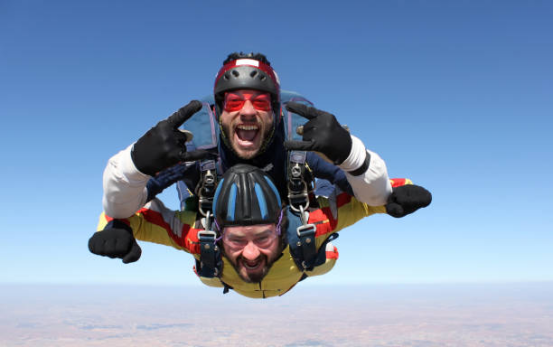
Some people regard skydiving as a “one time” in their life list, and they just need to experience the excitement. But what about some people? They dive into this sport and fly into another life track from then on. Getting a skydiving license is not just a certificate of “I dare to jump”, it is actually a pass to the world of freedom. So is this certificate worth getting? What are the levels? How long does it take and how much does it cost? This will take some time to talk about.
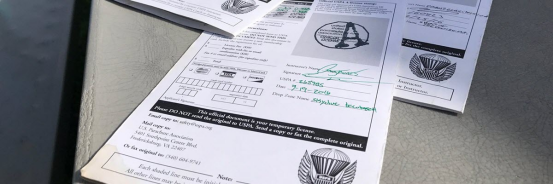
Skydiving license classification system
In the United States and many other countries, skydiving licenses are divided into four levels: A, B, C, and D. The levels progress gradually, representing the growth of the skydiver’s skills and experience:
| License level | Minimum number of skydives | Minimum free fall time |
| Level A | 25 times | — |
| B-level | 50 times | 30 mins |
| C-level | 200 times | 60 minutes |
| D-level | 500 times | 3 hours |
Level A: From “I dare to jump” to “I can jump”
Level A is the starting point for beginners, like a bird that has just learned to use its wings and is trying to fly off the ground. To get it, you have to complete ground lessons, at least 25 skydives, and have done five free-fall group jumps with more than two people, and – yes, you can’t avoid the written test.
But once you get it right, it’s like a key that will help you unlock your true solo dancing life. From that moment on, you are no longer a tourist, but a formal member of the “heavenly” community.
Level B: The first threshold for advanced players
To be honest, people who can jump 50 times are no longer just “curious”. Most of them are really addicted. To get a B level, you have to be able to form a skydive, complete a live water training (like a skydiving version of drowning), and do a few more exams.
With the B level, you can jump in nightclubs, jump from helicopters, hot air balloons… and even start to consider becoming a coach. At this point, you are no longer “jumping”, but “growing in flight”.
C-Class: Mastering the Art of Flying
At this point, skydiving is no longer just an action, but an art. 200 skydives, 50 formations, 25 precision landings… Behind each number is sweat and tacit understanding. You can even start wearing a GoPro to record your moments in the sky, or even consider wing suit flying – yes, the kind that flies like a bat.
D-level: The glory of the “chosen one”
500 skydive times, 3 hours of free fall, 25 formations of 8 or more people… Honestly speaking, those who can get to this point don’t just treat skydiving as a hobby, but have already regarded it as a lifestyle.
D-level skydivers can apply to be tandem instructors and even participate in professional performances. They are not only flying, but also teaching others how to fly. Just like an aerial mentor.
Is skydiving worth it? Some people think it’s crazy, some people think it’s the second awakening of life
No one can answer this question for you. But if you ask those who have already jumped, most of them will say: “After the first jump, I knew that I couldn’t stop doing it.”
Extreme happiness, almost addictive
Endorphins, serotonin, and adrenaline all burst in the air. The focus and release of “pure present moment” is really a great tool for relieving stress. Even if life is a mess, in those few seconds of jumping, nothing seems to matter.
The world suddenly became much bigger
With a license, you can go to skydiving parties (Boogies) around the world, including the Pyramids, Blue Holes, the Alps, the coast of South Africa… Some people even saw koalas when they landed while skydiving in Australia. Does it feel like a dream?
The community is really different.
Do you think skydivers are crazy? Wrong, they are actually the most stable group of people. They take care of each other, exchange techniques, chat about life, and may even become your most real friends during your trip.
There is always the next level waiting for you
There is no end to skydiving. From CRW (parachute formation) to Freefly, from fancy parachute opening to crossing air currents, every small project can be played out. You will find that it is not only a sport, but also a way of lifelong learning.
Are the risks of skydiving worth it?
Of course there are risks. Just like driving, diving, and skiing, they are “controllable risks.” The question is not whether there are dangers, but whether you take them seriously enough.
You must understand the procedures, learn to judge, and listen to the coach’s advice. Many accidents are not caused by fate, but by carelessness. But understanding the risks does not make you afraid, but makes you ready to face that moment.
Finally, this flight is worth your time.
Skydiving is more than just falling from the sky. It allows you to know yourself, redefine the word “freedom”, and perhaps meet another you – a braver, more focused, and more passionate person.
So, if you still have the desire to fly in your heart, don’t suppress it. Sign up for a ground course, change into your parachuting suit, fasten your belt, take a deep breath – in the next second, you will fall into a world you have never imagined.