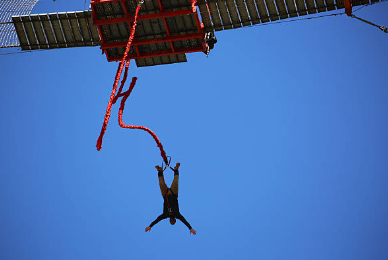
Bungee jumping is the ultimate test of human resolve, offering a visceral experience of freefall that few other activities can match. It is not merely a stunt but a sophisticated sport that relies on the precise application of physics and high-grade materials to ensure that the “uncontrollable heartbeat” felt at the edge results in a safe and exhilarating return.
To truly appreciate the jump, one must understand the layers behind the adrenaline. From the ancient ritualistic roots to the modern-day engineering of elastic cords, this guide provides a vertical deep-dive into everything a prospective jumper needs to know before taking the plunge.
The Evolution of the Leap: From Tradition to Modern Sport
The origins of bungee jumping are found in the “land diving” rituals of Pentecost Island in Vanuatu. Known as Gkol, young men would leap from tall wooden towers with vines tied to their ankles as a rite of passage and a prayer for a bountiful harvest. The modern iteration was popularized in the late 1970s by the Oxford University Dangerous Sports Club and later commercialized by A.J. Hackett in New Zealand.
From Vines to Latex
The transition from rigid vines to military-grade elastic cords changed the sport from a dangerous ritual to a globally accessible extreme activity. Modern cords are designed to stretch up to four times their resting length, providing a smooth deceleration rather than a jarring stop.

The Physics of the Fall: Gravity Meets Elasticity
The thrill of the jump is governed by Hooke’s Law, which describes the relationship between the force applied to an elastic material and its extension. As you fall, gravity accelerates your body at 9.8 meters per second squared. Once the cord reaches its natural length, it begins to exert an upward force, slowing your descent.
Understanding G-Forces
During the “rebound” phase, jumpers experience multiple G-forces. Professional operators calculate the cord length based on the jumper’s weight to ensure the maximum stretch occurs safely above the ground or water surface.
| Phase of Jump | Physical Force | Sensation |
|---|---|---|
| The Edge | Static Equilibrium | Anticipation/Fear |
| Freefall | Acceleration (G) | Weightlessness |
| Cord Stretch | Elastic Potential Energy | Deceleration |
| The Rebound | Kinetic Energy | Weightless Surge |

Safety First: Essential Equipment and Rigging Protocols
Modern bungee jumping maintains an impeccable safety record due to redundant systems. Every jumper is typically secured by two independent points: an ankle harness and a body harness. If one system were to fail, the other remains fully functional.
The Anatomy of a Bungee Cord
Cords are composed of hundreds of individual latex strands encased in a tough outer sheath. Operators track the “jump count” for every cord, retiring them long before they reach their fatigue limit.
-
Load Testing:
Cords are pre-stretched and tested for weight capacity. -
Triple-Check System:
Three different jump masters verify the weight and rigging before the leap. -
Environmental Monitoring:
Wind speeds and temperature are constantly monitored to ensure safe flight paths.
The Psychological Impact: Conquering Fear and the Adrenaline Surge
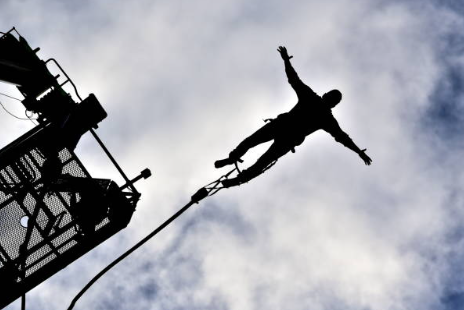
The “uncontrollable heartbeat” is a result of the body’s sympathetic nervous system entering “fight or flight” mode. This release of adrenaline and endorphins creates a natural “high” that can last for hours after the jump.
Overcoming the “Platform Freeze”
Expert instructors suggest looking at the horizon rather than directly down at the ground. This helps manage the visual perception of height and reduces the immediate onset of vertigo.
Expert Advice for First-Timers
-
Wear Comfortable Clothing:
Avoid loose jewelry or hats that can fly off. Secure footwear is a must. -
Don’t Overthink:
The longer you stand on the edge, the harder it becomes. Trust the equipment and the crew. -
Breathe:
Deep, controlled breathing helps oxygenate the blood and keeps the mind focused during the countdown.

Preparing for Your First Jump: A Step-by-Step Checklist
Before you head to the bridge or tower, ensure you meet the physical requirements. While bungee jumping is accessible to many, certain medical conditions like high blood pressure, heart conditions, or back injuries may require a doctor’s clearance.
Pre-Jump Technical Checklist
- Weight verification for cord calibration.
- Harness fitment check (should be snug, not restrictive).
- Review of the “landing” or “retrieval” procedure.
- Mental visualization of the jump form.
Frequently Asked Questions (FAQ)
-
Is there a weight limit for bungee jumping?
- Yes, most sites have a minimum weight (usually around 35-45kg) and a maximum weight (around 115-150kg) to ensure the cord’s elasticity works within designed parameters.
-
What happens if the cord snaps?
- While a common fear, cord snaps are extremely rare in professional operations. Cords are made of hundreds of individual strands; even if several were to break, the remaining strands would hold. Furthermore, cords are retired based on jump counts, not just visible wear.
-
Can I jump if I have a fear of heights?
- Many people use bungee jumping specifically to confront acrophobia. The controlled environment and professional support make it one of the safest ways to face and manage this fear.
-
Which is better: Ankle or Body harness?
- Most commercial jumps use both. The ankle harness provides the classic head-first dive experience, while the body harness acts as a safety backup and provides stability during the rebound.
-
How long does the freefall last?
- Depending on the height of the platform, a freefall typically lasts between 3 to 6 seconds before the cord begins to tension.