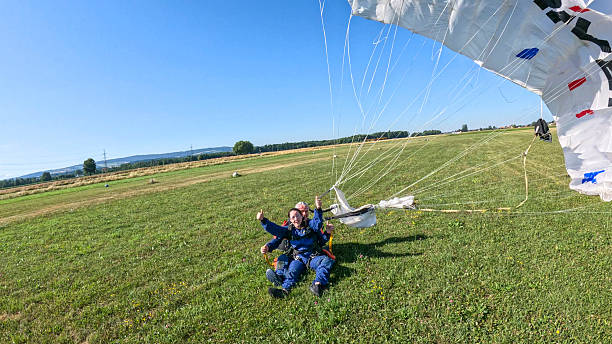
During a skydiving trip, the most challenging part of your experience and judgment is often not the moment you jump, but the final thirty seconds before landing. While freefall can be achieved with gravity, a safe landing relies entirely on skill: interpreting wind direction, maneuvering your parachute, and predicting your landing point. A single mistake in any one step can turn a “perfect parachute fold” into a “rolling and falling.” A true master’s skill isn’t measured by how high he flies, but by how steadily he lands.
1. Understanding the Wind: Core Skills for Determining Wind Direction and Speed
Wind during skydiving isn’t just a background condition; it’s a key variable that directly affects your landing point and parachute control. To land safely, you must first learn to “read the wind.”
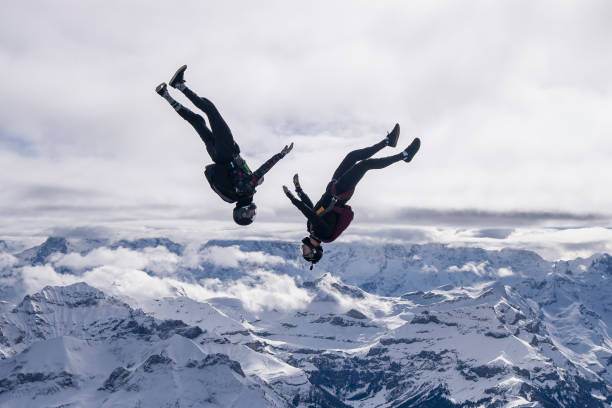
1. Ground Assessment:
Before taking off, skydivers typically observe windsocks or smoke on the ground. The direction the windsocks point indicates the direction of the wind. If the windsocks point north, the wind is blowing from the south. They can also observe the movement of grass, leaves, flags, or dust to comprehensively assess the wind direction and strength.
2. In-flight judgment:
Once you’ve deployed your parachute and are beginning your descent, observe whether your drift direction aligns with the ground wind vane. If your parachute consistently drifts in one direction, you’re flying with the wind. To land safely, you must correct your course in advance and plan your final landing point against the wind.
3. Wind Speed Reference Range:
The ideal wind speed for recreational skydiving is 3 to 5 meters per second. Beginners are not recommended to jump in winds exceeding 8 meters per second, as the parachute will be easily disturbed, making landing significantly more difficult.
2. Planning the landing point: Calculating from the air
When skydiving, it is not just about “looking at the ground”, but also about dynamically correcting the landing point based on wind and speed.
1. Landing against the wind:
The golden rule for a safe landing is to always land against the wind. This will reduce your ground speed, increase your parachute’s lift, and make it easier to control your posture and slow down.
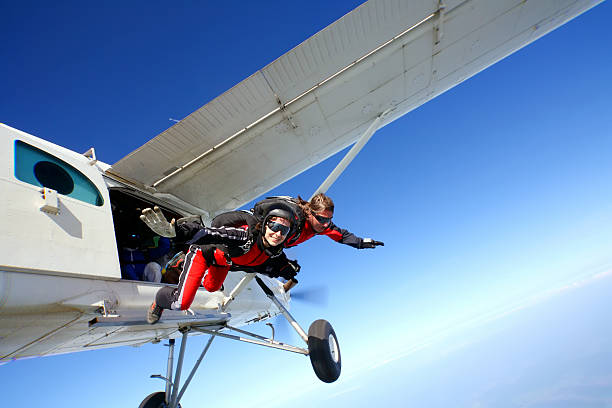
2. Identify a reference point in advance:
After deploying your parachute, lock onto a visible reference point on the ground as soon as possible, such as a runway, a flag marker, or the center of the landing zone. Keep the parachute aligned with the target and adjust the trajectory according to the wind direction. If you notice you are drifting off target, pull the directional control cord to correct as soon as possible, and don’t wait until you are too close to the ground to make adjustments.
3. Three-stage approach method:
Professional skydivers generally use the “three-stage approach method”:
Downwind Leg : Fly downwind, maintain altitude, and observe wind direction.
Base Leg : Turn towards the crosswind direction and prepare to correct the landing point.
Final Leg : Aim upwind and maintain a stable stance as you prepare for landing.
This approach allows you to descend within a controlled range, avoiding sudden adjustments that could cause loss of control.
3. Mastering Flare: The Key Move at the Moment of Landing
The flare, or “flattening” maneuver, is a key technique for skydivers to slow down and achieve a steady landing. At about two meters in altitude, the parachutist pulls the control cord downward evenly with both hands, raising the leading edge of the parachute, creating additional lift. After a brief suspension, the parachutist slowly touches the ground.
Common mistakes and fixes:
Pulling too early will cause premature loss of lift, resulting in a faster landing speed.
Pulling too late : your feet will touch the ground first, which may make you fall or injure your knees.
Too much flare on one side : The wing tilts and it is easy to fall sideways when landing.
It is recommended that beginners practice the flare timing repeatedly in a simulator or ground parachute control training area until it becomes muscle memory.
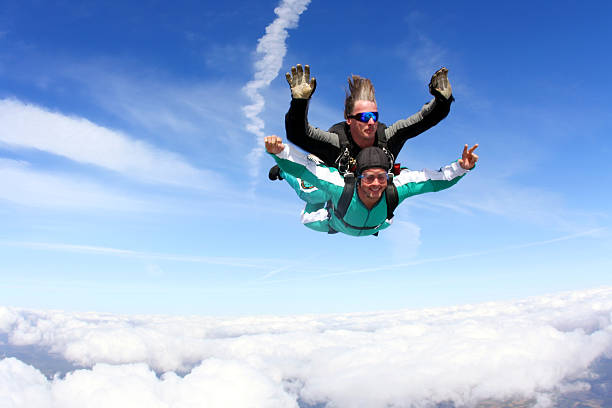
4. Posture and protection after landing
At the moment of landing, keep your feet together, knees slightly bent, and body slightly forward, ready to roll with the force of the impact. If the wind speed is strong, you can use the “PLF maneuver” (Parachute Landing Fall), which involves cushioning the impact in the order of feet, calves, thighs, buttocks, and back to maximize the dispersion of the impact force.
Also, don’t loosen the parachute straps immediately after landing. If the parachute hasn’t completely collapsed, it could be pulled by the wind again and cause a second fall. The correct approach is to first grab one side of the parachute cord and quickly lower the parachute into the wind.
5. Training and Thinking: Safety Comes from Habit
The key to a successful skydive isn’t just about form, it’s about habit. Before every jump, review the wind speed data, confirm the condition of your parachute lines, and mentally rehearse your approach. Experienced parachutists maintain their confidence because they always assume the wind will change this time.
A safe landing, seemingly a fleeting moment, is the result of countless judgments, practice, and calm composure. Mastering the laws of the wind, understanding the temperament of your wing, and respecting the power of the weather will allow you to truly experience the peace and awe that comes with “flying” the moment you regain your footing.