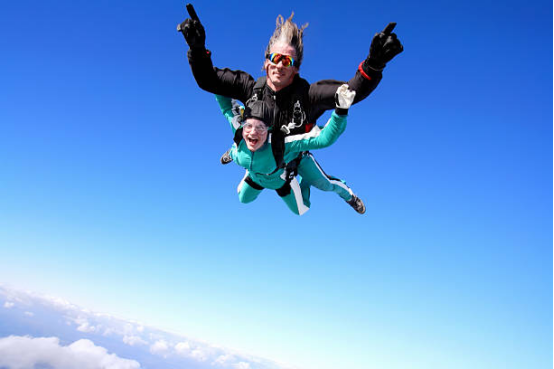
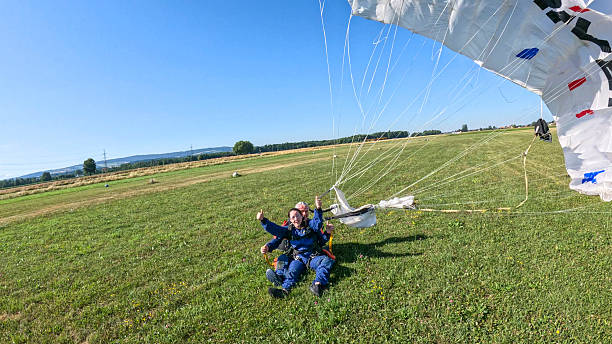
Who hasn’t dreamed of jumping from thousands of feet in the air and experiencing the thrill of free fall? But in skydiving, a sport that fights gravity, “weight” is a key indicator – it not only affects the performance of the parachute and the aircraft, but also directly affects the safety and comfort of the instructor and students. Now, let’s talk with me about the upper weight limit for tandem skydiving, the reasons behind it, and what to do if it is “over the limit”.
Why is there a weight limit?
The load limit of the parachute system
Each parachute and harness must pass the FAA (Federal Aviation Administration) Technical Standard Order (TSO) test to determine its maximum load capacity.
Exceeding the load-bearing capacity means that the risk of “hard opening the parachute” when opening, cable breakage or tearing increases dramatically, and may even cause a “dive-style” landing, with disastrous consequences.
Safety considerations for aircraft takeoff and landing
The plane used for skydiving also has a maximum load capacity. Once the passengers, instructors, and equipment push the plane to its limit, it may not be able to climb or land safely.
Fit requirements for double carriers
The tandem skydiving harness, which holds the student, instructor and parachute together at four attachment points, is adjustable but will only fit a certain range of body shapes.
If you are overweight or your height and weight do not match, it will be difficult to put on the harness, the skydiving process will be very uncomfortable, and even increase the risk of slipping.
Coach’s physical load
Tandem skydiving is a team sport, and the instructor must accompany the free fall while accurately controlling the parachute bag and guiding the landing. Overweight students will bring extra pressure to the instructor and increase the probability of injury.
Common weight limits
| Skydiving Center | Maximum tandem skydiving capacity (including equipment) | Remark |
| Skydive Danielson (CT) | 240 lbs | About 300 pounds including jump suit and shoes; no matter how bad it is, it will not exceed this limit |
| Skydive Paraclete XP (TX) | 230 lbs.; 20 USD for 230–250 lbs. | 250 pounds is the hard limit, no exceptions |
| Skydive Carolina (NC) | 225 lbs | Includes clothes and shoes on the scale; private measurement, only the operator knows |
| Most US landing zones | 220–260 lbs | Please be sure to confirm the exact information with your chosen landing zone before booking |
Tips : The above figures include the weight of the clothes and shoes you wear that day. Be sure to understand the specific weight measurement method in advance.
What should I do if I am overweight?
Try Licensed Skydiving (AFF)
Once you have a free fall license, you can use a larger parachute bag, and some drop zones have more relaxed weight restrictions for solo skydiving.
Indoor wind tunnel experience
If your weight is out of the range but you still want to feel the thrill of flying, a wind tunnel has no upper weight limit and is an ideal alternative.
Other aerial sports
Activities such as paragliding and parachuting have relatively loose weight restrictions and can also satisfy the dream of “high-altitude flying”.
Tips for preparing before skydiving
Be sure to check before booking : Don’t just rely on the advertisement, always contact the drop zone customer service to ask about the final maximum weight limit “with equipment”.
What to wear when measuring weight on the day : Try to wear light clothes and shoes to avoid exceeding the standard due to thick clothes or boots.
Health assessment : If you have concerns about your heart, lungs, bones, or other health issues, please consult a doctor in advance to confirm that you can complete movements such as “lifting your legs 90 degrees when landing.”
Weight management : Make reaching skydiving weight a health goal, eat right and exercise, not only for skydiving, but also for a healthier you.
Skydiving is not only a battle with wind and gravity, but also a tribute to the limits of life. Knowing and respecting weight limits is the greatest respect for yourself, your equipment, your coach, your aircraft, and this sport. Are you ready? When you take that small step, you will gain an unparalleled flying experience!