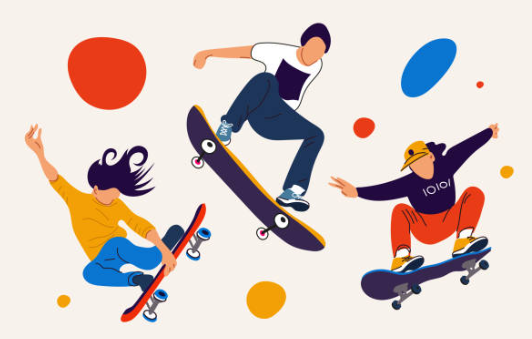
Skateboarding represents a unique intersection of athletic prowess, creative expression, and urban exploration. It is a discipline that demands patience, resilience, and a deep understanding of physics. In this comprehensive guide, we synthesize the core components of skateboarding—from the technical breakdown of practice actions to the vital safety measures required to sustain a long-term journey in the sport. By mastering the art of free sliding on the street, skaters transform ordinary urban landscapes into extraordinary playgrounds of possibility.
A Complete Analysis of Skateboarding Practice Actions
The foundation of skateboarding excellence lies in the mastery of specific, repeatable actions. These maneuvers are not merely tricks; they are the building blocks of all advanced skating. Understanding the biomechanics behind each movement allows a skater to troubleshoot their form and progress more rapidly through the learning stages.
The Mechanics of the Ollie
The Ollie is the most fundamental trick in modern skateboarding. It involves a synchronized “pop” of the tail against the ground while simultaneously sliding the front foot upward toward the nose. This motion creates a vacuum-like effect that lifts the board into the air. To execute a perfect Ollie, one must focus on the following details:
- The Pop: Using the ball of the back foot to snap the tail down with explosive force.
- The Slide: Turning the front foot inward and sliding the outer edge of the shoe up the grip tape to level the board.
- The Leveling: Pushing the front foot forward at the peak of the jump to bring the tail up to meet the back foot.
Mastering Manuals and Balance
Manuals are the skateboarding equivalent of a wheelie. They require an immense amount of core strength and micro-adjustments in weight distribution. Practicing manuals helps skaters develop a “feel” for their board’s center of gravity, which is essential for transition skating and technical street lines.

Essential Safety Protection Techniques in Skateboarding
Safety is often overlooked by beginners, yet it is the most critical factor in ensuring longevity in the sport. Skateboarding involves high speeds and unpredictable surfaces, making falls inevitable. Implementing a robust safety protocol minimizes the risk of debilitating injuries and builds the confidence necessary to attempt more difficult maneuvers.
The Hierarchy of Protective Gear
Not all gear is created equal. A professional-grade setup should include equipment specifically designed for high-impact sports. Below is a comparison of essential safety components:
| Gear Type | Primary Function | Key Feature to Look For |
|---|---|---|
| Helmet | Brain and skull protection | ASTM or CPSC Certification |
| Wrist Guards | Prevents fractures during falls | Hard plastic splints on palm and back |
| Knee Pads | Absorbs impact on transitions | High-density foam and riveted caps |
| Elbow Pads | Prevents abrasions and bursitis | Breathable mesh and secure straps |
The Art of the Controlled Fall
Learning how to fall is just as important as learning how to ride. Professional skaters rarely land “stiff.” Instead, they utilize techniques like the “shoulder roll” or “knee slides” (on ramps) to dissipate kinetic energy. By rolling through a fall, you redirect the downward force into a horizontal motion, significantly reducing the impact on your joints and bones.

The Art of Free Sliding on the Street
Street sliding is the pinnacle of skateboarding’s creative side. It involves utilizing the environment—curbs, rails, ledges, and banks—to perform fluid movements. This style of skating requires a keen eye for “spots” and an understanding of how different textures affect the board’s slide and grip.
Surface Analysis and Friction Management
Different surfaces require different approaches. A smooth concrete plaza offers high grip and predictable slides, while rough asphalt requires larger, softer wheels to maintain momentum. Skaters often use “skate wax” to reduce friction on granite or metal edges, allowing for longer and smoother grinds and slides.
The Psychology of Street Skating
Beyond the physical, street skating is a mental game. It requires “visualization”—the ability to see a trick in your mind before executing it on a specific obstacle. This mental preparation helps in overcoming the “fear factor” associated with skating in public spaces and on unrefined terrain.

Technical Breakdown of Kickflips and Shuv-its
Once the Ollie is mastered, the next logical step is learning to flip the board. These actions introduce the concept of “flick” and “rotation,” adding a three-dimensional element to your practice sessions.
Executing the Kickflip
The kickflip is achieved by popping an Ollie but flicking the front foot off the corner of the nose (the “pocket”). This causes the board to flip along its longitudinal axis. The secret to a clean kickflip is the “catch”—using the back foot to stop the rotation in mid-air before landing.
Understanding the Pop Shuv-it
Unlike flip tricks, the Shuv-it involves rotating the board 180 degrees horizontally beneath the skater’s feet. This is achieved through a “scooping” motion with the back foot. It requires the skater to jump slightly forward to meet the board as it moves through its rotational path.

Advanced Equipment Maintenance for Peak Performance
A skater is only as good as their equipment. Regular maintenance ensures that your board responds accurately to your movements. Neglecting your gear can lead to “wheel bite,” seized bearings, or snapped decks, all of which can cause unexpected accidents.
Bearing Care and Lubrication
Bearings are the heart of your wheels. Over time, dust and moisture can penetrate the shields, causing friction and slowing you down. Periodically cleaning your bearings with isopropyl alcohol and applying a drop of specialized speed cream will significantly extend their lifespan and improve your speed retention.
Deck Integrity and Grip Tape Maintenance
The “pop” of a board comes from the dryness and structural integrity of the maple plies. Avoid skating in the rain, as waterlogged boards become “soggy” and lose their responsiveness. Additionally, keep your grip tape clean using a grip eraser to ensure your feet remain locked into position during technical tricks.

Navigating Urban Environments and Legal Considerations
Street skating often exists in a legal gray area. Understanding how to navigate urban environments respectfully is key to the sport’s sustainability and your personal safety. This involves recognizing “no skating” zones and understanding local ordinances regarding public property.
The Concept of ‘Spot’ Etiquette
When skating in public, it is vital to practice good etiquette. This includes not leaving trash behind, avoiding damage to fragile architecture, and being mindful of pedestrians. Building a positive relationship with the community can often prevent the installation of “skate stoppers” (metal brackets designed to prevent grinding).

Physical Conditioning and Injury Prevention
Skateboarding is an asymmetrical sport that can lead to muscle imbalances. To prevent long-term issues, skaters should engage in supplementary physical conditioning. Strengthening the core, ankles, and hip flexors provides the stability needed to land high-impact tricks safely.
Dynamic Stretching vs. Static Stretching
Before a session, focus on dynamic stretches (leg swings, hip circles) to prime the muscles for explosive movement. Post-session, use static stretching to help the muscles recover and maintain flexibility. This routine reduces the likelihood of muscle strains and ligament tears.

The Evolution of Skateboarding Culture
From its roots in “sidewalk surfing” to its inclusion in the Olympic Games, skateboarding culture has undergone a massive transformation. Understanding this history provides context for the tricks and styles practiced today. The DIY (Do-It-Yourself) ethos remains at the core, encouraging skaters to build their own ramps and document their progress through film and photography.

Advanced Street Sliding Strategies
For the experienced skater, sliding is about more than just movement; it is about style and flow. Advanced strategies involve “linking” tricks together into lines, where the exit from one slide becomes the setup for the next maneuver. This requires an intimate knowledge of momentum and board control.
Transitioning from Flat Ground to Obstacles
The transition from practicing on flat ground to skating obstacles is a significant milestone. It requires adjusting your approach angle and speed. When sliding a rail, for instance, your weight must be centered directly over the truck or the middle of the board, depending on whether you are performing a 50-50 grind or a board slide.

Choosing the Right Setup for Your Style
Your choice of hardware should reflect your skating goals. A street skater typically prefers a narrower deck (8.0″ – 8.25″) and smaller, harder wheels (50mm – 53mm) for technical flip tricks. Conversely, a transition or “bowl” skater might opt for a wider deck (8.5″+) and larger wheels (56mm+) for stability and speed.

The Role of Documentation in Skateboarding
Filming and photography are inseparable from the skateboarding experience. Documentation serves as a tool for self-improvement and a means of sharing creativity with the global community. Analyzing footage of yourself allows you to see flaws in your foot placement or timing that are impossible to notice while in motion.

Overcoming Plateaus in Practice
Every skater hits a plateau where progress feels stagnant. Overcoming this requires changing your environment or focus. If you are struggling with flip tricks, spend a week focusing on transition skating or just cruising. Often, taking the pressure off allows your muscle memory to solidify, leading to a breakthrough when you return to your goal trick.

Conclusion: The Lifelong Journey of Skateboarding
Skateboarding is a lifelong pursuit that offers endless opportunities for growth. By prioritizing safety, mastering the fundamental actions, and embracing the creative freedom of the streets, you join a global community of individuals dedicated to the art of the slide. Remember that every professional was once a beginner who refused to give up after a fall. Stay persistent, stay protected, and keep rolling.
Frequently Asked Questions (FAQ)
- Q1: How long does it typically take to learn a solid Ollie?
- For most beginners, learning to get the board off the ground takes between two weeks and two months of consistent daily practice. Mastering the height and control of the Ollie can take a year or more of refinement.
- Q2: Is it necessary to wear a helmet if I am only skating on flat ground?
- Yes. Most head injuries in skateboarding occur due to unexpected “freak accidents” on flat ground, such as catching a stone or slipping out on a manual. A helmet is essential regardless of the terrain.
- Q3: Why does my skateboard turn to one side even when I’m not leaning?
- This is usually due to the bushings in your trucks being “broken in” unevenly or being too tight/loose. Check the alignment of your trucks and ensure your bushings are not cracked or deformed.
- Q4: What is the best way to stop when going fast?
- The safest way to stop at high speeds is “foot braking.” This involves keeping your front foot on the board and slowly lowering the sole of your back foot onto the ground to create friction and decelerate gradually.
- Q5: Can I use regular sneakers for skateboarding?
- While you can, it is not recommended. Skate-specific shoes are made with flat, grippy soles (vulcanized or cupsole) and reinforced materials like suede to withstand the abrasive nature of grip tape.