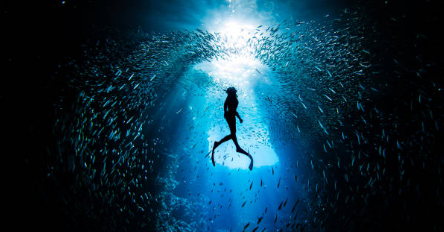
Diving offers a profound escape, a journey into a silent, vibrant world that covers more than 70% of our planet. It’s a chance to experience true weightlessness, floating amidst colorful coral reefs, swimming alongside schools of fish, and exploring the solemn beauty of ancient shipwrecks. This guide is your first step into that deep blue world. We will explore the fundamentals of scuba diving, the necessary equipment, the path to certification, and the incredible environments that await you. Prepare to unlock a new dimension of exploration and adventure.
What is Scuba Diving? A Journey Below the Surface
SCUBA is an acronym for “Self-Contained Underwater Breathing Apparatus.” It’s a mode of underwater diving where the diver uses a completely independent breathing set to explore the aquatic environment. Unlike other forms of diving, which rely on breath-holding or surface-supplied air, scuba diving gives you the freedom to move untethered, like a native inhabitant of the sea.
The History and Evolution
While humans have been exploring underwater for centuries, modern scuba diving was born in the mid-20th century with the invention of the “Aqua-Lung” by Jacques-Yves Cousteau and Émile Gagnan. This groundbreaking invention democratized underwater exploration, allowing scientists, adventurers, and everyday people to witness the wonders of the deep firsthand. Since then, technology has advanced dramatically, making diving safer and more accessible than ever before.
The Underlying Principles
Diving is an application of physics and physiology. The primary challenge is breathing underwater while managing the effects of increased pressure. As you descend, the water pressure on your body increases, affecting your ears, sinuses, and the air in your lungs. Scuba training teaches you how to manage these effects safely, primarily through techniques like “equalization” and controlled breathing to manage buoyancy—the ability to float neutrally in the water.
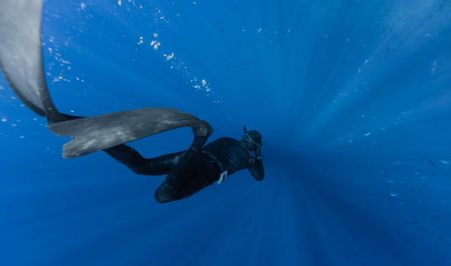
Essential Gear for Your First Underwater Adventure
Having the right equipment is crucial for a safe and enjoyable dive. While you will typically rent gear during your certification course, understanding its function is key. Here is a checklist of the core components of a scuba set.
- Mask: Creates an air space in front of your eyes, allowing you to see clearly underwater.
- Snorkel: Useful for breathing at the surface without using air from your tank.
- Fins: Provide propulsion, allowing you to move through the water with efficiency.
- Buoyancy Control Device (BCD): A vest that can be inflated or deflated to control your position in the water column.
- Regulator: The device that delivers breathable air from your tank at the correct pressure.
- Scuba Tank: A cylinder containing compressed air that you breathe from.
- Dive Computer: A crucial safety device that tracks your depth, dive time, and calculates your safe ascent profile to avoid decompression sickness.
- Wetsuit or Drysuit: Provides thermal insulation to keep you warm in the water.
- Weight System: Lead weights used to counteract the natural buoyancy of your body and gear.
Getting Certified: Your Passport to the Underwater World
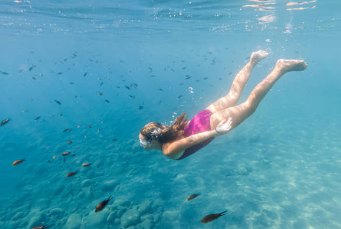
You cannot simply buy gear and jump into the water. Scuba diving requires specific knowledge and skills to be practiced safely. A certification from a recognized agency like PADI, NAUI, or SSI is your license to dive, proving you have mastered the necessary safety procedures and techniques.
The Open Water Diver Course
The entry-level certification is typically called “Open Water Diver.” This course is broken down into three main phases, ensuring you are a competent and confident diver upon completion.
| Course Phase | What You’ll Learn |
|---|---|
| Knowledge Development | Covers the principles, procedures, and safety information for diving. This is often done through e-learning or classroom sessions. |
| Confined Water Dives | Takes place in a swimming pool or calm, shallow water. Here, you’ll practice essential scuba skills like clearing your mask and managing your buoyancy. |
| Open Water Dives | The final phase where you apply your skills in a natural body of water (like an ocean or lake) under the direct supervision of your instructor. |
Exploring Diverse Underwater Environments
Once certified, a whole new world of exploration opens up. The planet is dotted with unique underwater landscapes, each offering a different kind of adventure.
The Vibrant Life of Coral Reefs
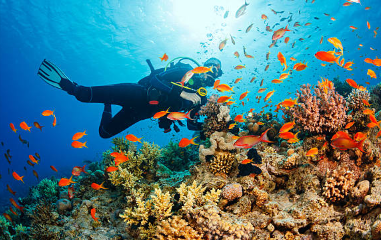
Often called the “rainforests of the sea,” coral reefs are bustling ecosystems teeming with life. Diving in a coral reef means being surrounded by a kaleidoscope of colors, from the intricate corals themselves to the thousands of species of fish, turtles, and invertebrates that call the reef home. They are fragile environments, and divers learn to navigate them with care to preserve their beauty.
The Silent History of Wreck Diving
Exploring sunken ships, planes, and other artificial structures is a completely different thrill. Wreck diving is like visiting an underwater museum. These sites often become artificial reefs, attracting unique marine life while offering a haunting glimpse into the past. Advanced training is usually required for penetrating deep inside wrecks.
Other-Worldly Kelp Forests
In cooler waters, you can find towering kelp forests that sway in the ocean currents, creating an ethereal, cathedral-like atmosphere. Sunlight filters through the canopy above, and seals, sea lions, and unique fish species can be found weaving through the kelp stalks.
Expert Tips for Beginner Divers
Building confidence as a new diver is about mastering the fundamentals. Focus on these key areas to make your first dives safer and more enjoyable.
Mastering Neutral Buoyancy
The goal of every diver is to achieve neutral buoyancy—the state of floating effortlessly, neither sinking nor rising. This is the key to conserving energy, reducing air consumption, and protecting the delicate marine environment. Practice making small adjustments to your BCD and using your breath to control your vertical position. Inhale to rise slightly, exhale to sink slightly.
Equalize Early and Often
Pressure-related ear injuries are the most common issue for new divers. The key to prevention is to equalize the pressure in your ears before you feel any pain. Start gently equalizing (by pinching your nose and blowing gently) as soon as you begin your descent, and continue to do so every few feet. If you feel pain, ascend slightly until it subsides and try again. Never force it.
Stay Calm and Breathe Continuously
The number one rule in scuba diving is to never hold your breath. Always breathe in a slow, deep, and continuous rhythm. This is not only crucial for safety during ascent but also helps you stay relaxed, which in turn lowers your air consumption and allows for longer, more enjoyable dives.
Frequently Asked Questions (FAQ)
-
Is scuba diving dangerous?
- Like any adventure sport, scuba diving has inherent risks. However, with proper training, adherence to safety procedures, and diving within your limits, it is a very safe activity. Statistically, it is considered safer than many common sports like bowling or jogging.
-
How much does it cost to get scuba certified?
- The cost for an Open Water Diver certification can vary widely depending on location, from around $400 to over $1000. The price typically includes instruction, gear rental, and certification fees.
-
Do I need to be a strong swimmer to scuba dive?
- You don’t need to be an Olympic-level swimmer, but you do need basic water competency. Certification agencies require you to pass a basic swim test (e.g., swimming 200 meters without stopping) and a float/tread water test to ensure you are comfortable in the water.
-
What’s the difference between scuba diving and snorkeling?
- Snorkeling is the practice of swimming on or through a body of water while equipped with a mask and a breathing tube called a snorkel. It is limited to the surface. Scuba diving allows you to breathe completely underwater for extended periods, enabling exploration of much deeper environments.